
Is it inevitable that trauma is the result of or reason for addiction problems?
On the t-shirt you will find the motion for the debate, and below it, arguments for and against.
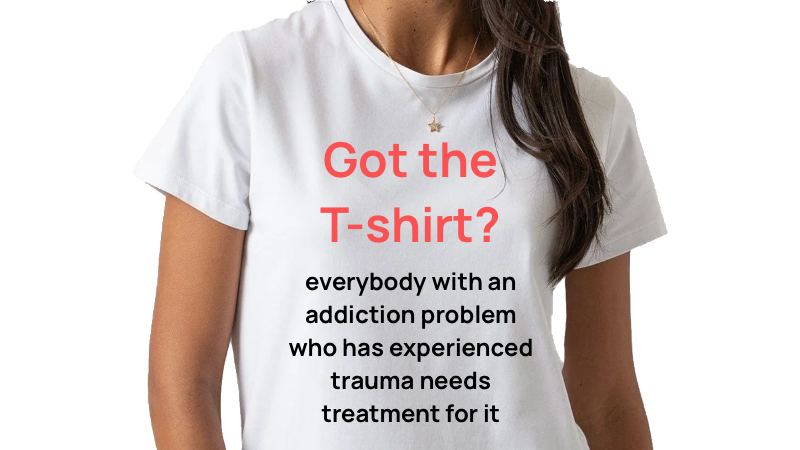
Are you for or against or not sure?
For... A significant number of service users have experienced trauma and developed PTSD. Many state a preference for both addiction and PTSD to be treated concurrently and by a single practitioner. Where the two conditions are treated together, outcomes for both are improved. It is incumbent on organisations wishing to offer specialist addiction interventions to provide the required resources.
Against... Some individuals are resilient to trauma and do not develop PTSD and some are content with their ability to cope. Combined trauma and substance use treatment requires well qualified staff who are fully supported by their organisation with training and supervision: it can be damaging to embark on exploring trauma if these resources are not in place.
Here is something to inform your thinking…
Read this summary of an article about integrated therapy There is a high prevalence of co-occurring PTSD and substance use disorders in addiction help-seeking populations. Treatment protocols and manuals are available, but rates of implementation are low; efficacy and effectiveness vary. It may be that practitioners are careful not to get involved in interventions where they lack the training and support to be sure that they do no harm. Practice can be safe and improve both PTSD and SUD outcomes, but is challenging in deciding delivery sequencing of target behaviours and in the effects on practitioners.
Service users have shown a preference for integrated treatment and should be given a choice of treatment methods; CBT and exposure treatment are necessary components and are both preferred. Organisations need to make significant resources available in order to deliver safe and cost effective treatment: training, supervision and opportunities for peer group support and sharing of experiences.
Get the full text of the article
Killeen TK et al (2016) Implementation of integrated therapies for comorbid post-traumatic stress disorder and substance use disorders in community substance abuse treatment programs. Drug Alcohol Review 34: 234–241 doi:10.1111/dar.12229
Have you looked at the What is Comorbidity? page?