
Should psychoactive drugs be more available over the counter?
On the t-shirt you will find the motion for the debate, and below it, arguments for and against.
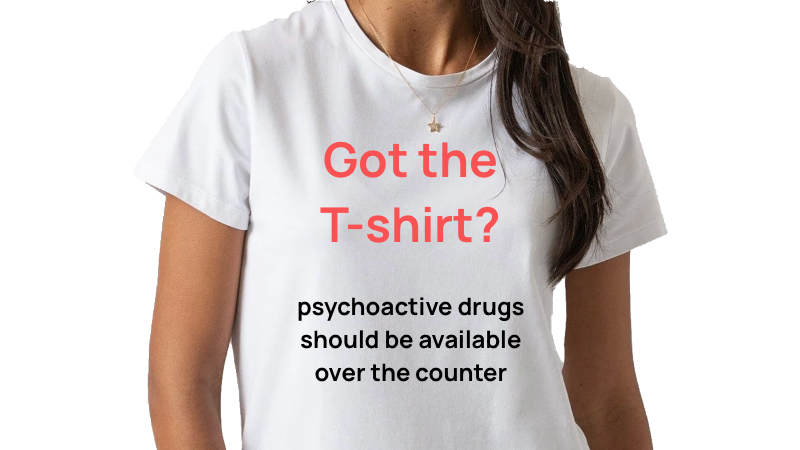
Are you for or against or not sure?
For... Over the counter drugs are labelled according to pharmaceutical content and dose. They are safer than drugs bought from the illicit market, and so the risk of poisoning and potentially fatal overdose is reduced. The availability of over the counter psychoactive drugs, which have limited addiction potential, helps keep people from illicit use.
Against... By definition, psychoactive drugs are addictive and, without strict controls, people will slip into taking cocktails of drugs without heeding the cautions on the packaging, ending up with accidental overdoses and possibly death. An over-the-counter market incentivises sales and shopping around rather than seeking help.
Here is something to inform your thinking…
Read the summary and have a look at this report: The European Monitoring Centre for Drugs and Drug Addiction (EMCDDA) produces informative reports about what is happening to substance use, particularly in Europe. Have a look through this report which offers some insights into which drugs, prescribed or otherwise, are causing emergencies serious enough for people to end up in hospital Emergency Rooms.
The findings reflect the well-known principle that the more available a drug or medication then the more likely that it will be misused and the more likely that there will be related problems. The report collated data from sentinel European Emergency Rooms for the period 2014-2017. There were 23,947 acute drug toxicity presentations, excluding alcohol, typically representing less than 1% of Emergency Room attendances. The main drug involved tended to reflect the prevalence of use by different age groups. Alcohol was frequently used with illicit drugs, especially cocaine. There were 101 deaths. A proportion of attendances were due to prescription drugs. A quarter of all presentations involved at least one prescription drug, and of these, half, 12%, were prescription only drugs. The chart shows the medications most frequently involved.
Get the full text of the article
EMCDD (2020) Drug-related hospital emergency presentations in Europe: update from the Euro-DEN Plus network
Have you looked at the Why are Drugs Addictive? page?