
Is lifestyle change an adequate intervention for anxiety or depression?
On the t-shirt you will find the motion for the debate, and below it, arguments for and against.
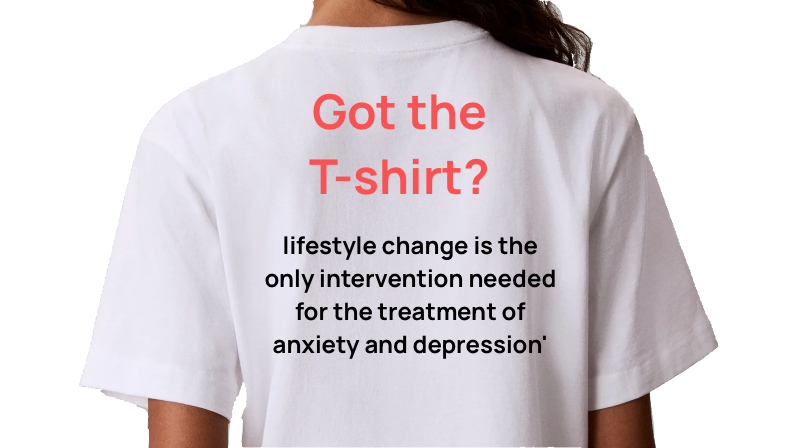
Are you for or against or not sure?
For... People leading healthy lifestyles reduce their risk of suffering anxiety or depression. It follows that any intervention that can bring about a reduction or elimination of an unhealthy lifestyle is going to be the best and most cost-effective treatment for comorbidity.These interventions are widely available including as self-help.
Against... Lifestyle interventions are a crucial part of treating addiction problems; however, anxiety and depression are barriers to change and pharmacotherapies which have a much more rapid effect will benefit these people more quickly and give space to make sustainable changes from more intensive talking therapies.
Here is something to inform your thinking…
These summaries of two research articles:
Healthy lifestyles This study aimed to identify adult lifestyle behaviours (diet, physical activity, sedentary time, smoking, alcohol, cannabis, and other drug use) at age 20 years and their associations with depression, anxiety, and stress symptoms at age 22 and 27 years. Three groups were identified: Healthy group evenly split between men and women – 65% of study participants: 98% non-smokers, 82% low level drinkers or abstainers, 71% non-cannabis users, 69% physically active, diets were poor. High substance use and low activity group – 84% were women. High substance use and very poor diet group – 99% were men. Of 27yr olds, the percentage with anxiety, depression and stress was: Healthy group: 10.3% | 14.2% | 13.2% High use, low activity group: 26.2% | 21.2% | 29.4% High use, high activity & poor diet group: 15.7% | 17.6% | 13.7%
Prescribing for anxiety and depression This study examined the prescriptions of people referred to a specialist addiction unit. 67% of drinkers, 39% of opiate users, and 82% using other drugs (mainly stimulants) had been prescribed at least one psychotropic medication (did not include opiate substitutes). It is estimated that in the general population 7.5% of individuals with anxiety or depression need pharmacotherapy. Antidepressants have only a modest benefit in people with co-morbid depression and substance use problems and only in more severe cases. A high prevalence of comorbidity has been questioned due to problems inherent in distinguishing independent mental health disorders from substance-induced disorders. Dependence, intoxication and withdrawal symptoms mimic mood and anxiety disorders.
Get the full text of the article
Collins S et al (2023) A longitudinal study of lifestyle behaviours in emerging adulthood and risk for symptoms of depression, anxiety, and stress. Journal of Affective Disorders 327: 244-253 doi.org/10.1016/j.jad.2023.02.010
Get the full text of the article
Oluyase AO et al (2013) A study of the psychotropic prescriptions of people attending an addiction service in England. Advances in Dual Diagnosis 6: 54-65 DOI: 10.1108/ADD-03-2013-0005
Have you looked at the Lifestyle Change and Dealing with Mental Health pages?